The Invisible Country
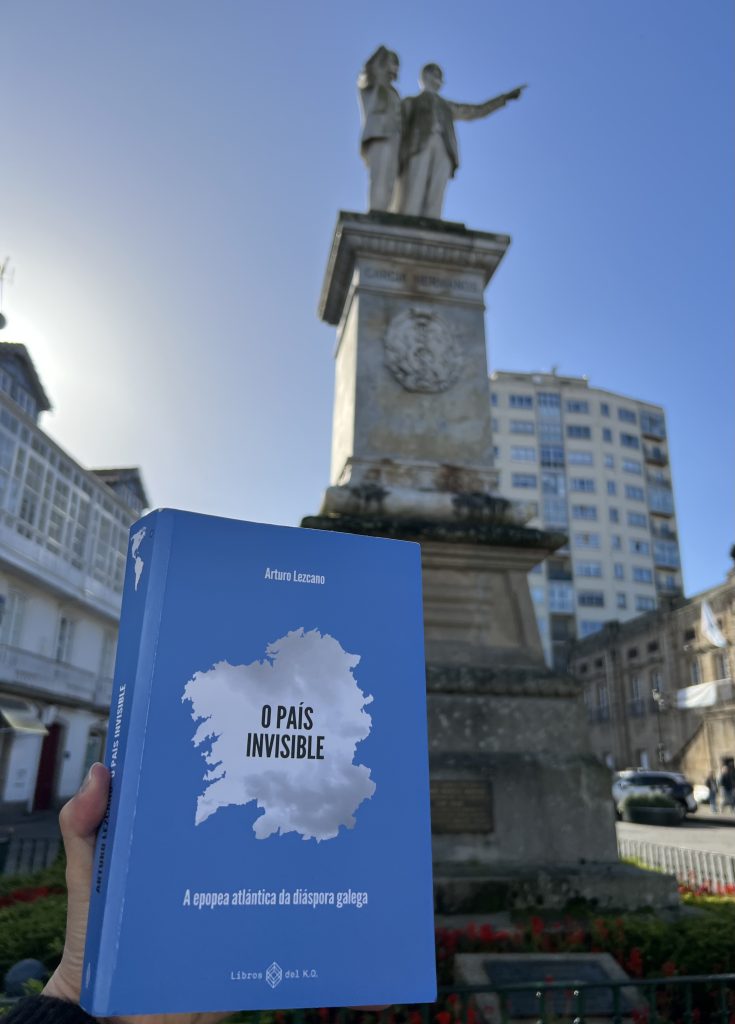
“Upon their return home, the García Naveira brothers built institutions for the most disadvantaged — the elderly, children, and women; a care home, several schools, and public washhouses that are still in use today.”
Arturo Lezcano – O País Invisible
At nearly 600 pages, I am still somewhere in the middle of this journey; I read slowly, letting each country, each story, settle and sink in. This book just keeps on giving; Arturo writes the epic of the Galician diaspora, one that had never been told like this, as the Irish, Jewish, or Italian stories have. It is an homage to all those unknown faces and lives that shaped both North and South America; and, in doing so, shaped Galicia itself.
I also find myself analysing the language, the author’s narrative voice, and the way he balances the journalistic with literary sensitivity. In the middle of a story, which he tells with care, he gently weaves in a personal reflection or detail; and those moments make me feel as if he were sitting with me by the lareira (Galician fireplace), listening to him speak. You can sense how emotionally involved he is; how passionate he feels about putting the Galician story on paper, about making sure people know how history placed us on the map.
For me, reading it has been an emotional rollercoaster; as a second-generation Galician, these stories feel deeply personal. They have brought back memories of my grandparents, of my childhood, and of that lingering, unanswerable question of identity; of belonging to two places at once, but none at the same time.
James Baldwin once wrote, “History is not a procession of illustrious people. It’s about what happens to a people. Millions of anonymous people is what history is about.” This book feels like that; a chorus of those voices, finally heard.
Reading between the lines, O País Invisible reminds us that the vast, often unacknowledged Galician talent scattered across the world could still have a profound impact on us today; they form an invisible country, our fifth province; and yet we have still not given their history a visible place; a museum dedicated to those who left, those who leave, and those who return or come for the first time ever.